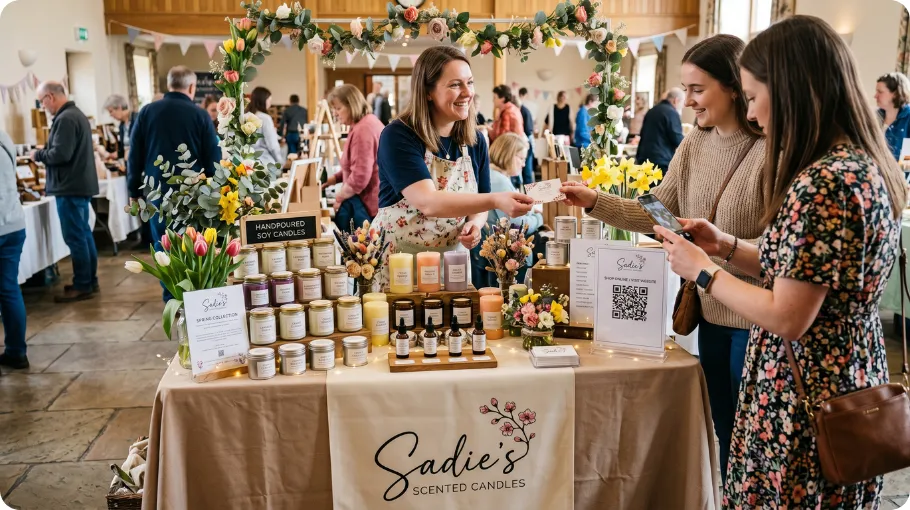
Stores have signage above the front door. On a website, every page is a front door. The top of the page is your prime real estate.
For years, I made a living helping businesses make the most of “above the fold” content, while strengthening the messaging with SEO copy that engaged and built credibility.
Getting the Right Words On Your Web Pages
The most difficult part of writing content for your website is getting the words right. That’s harder to do when thinking about the people who will be reading it. Until it’s published, it won’t be read.
You can and should write messy. Turn off spell check, (red lines are annoying), and give grammar no attention. Just focus on words. Not even sentences or paragraphs. That’s what proofreading is for.
Once you have words to work with, you can polish the content. Shorten sentences, break up paragraphs, delete parts of sentences or entire paragraphs.
How to Say What You Do with Only Text on a Website
It’s easier to tell people what you do than to write about it. It’s far harder to write the about page for your website.
A common problem on about pages is writing about you instead of what you’re about. All you need to convey is your credibility. Why can someone trust you for what they need? A photographer’s website that tells people you’re vegan is pointless.
Giving Your Website Pages Voice and Style
Writing advice focuses on styles. First person (I), second person (you), or third person (they).
Those are important, but so too is personality. That’s your experiences, and how you speak being put into words that represent how you talk, or email customers.
I’ll give you an example of a time I nearly passed up on a beautiful pet urn, just because of a single word. Our.
Our pet urns are…
Then it was interrupted by a notice along the lines of:
I usually have multiple orders so there’s a x week wait time.
The wait time was expected. I’d be worried if it would arrive within a few days. The notice was good to know, but it switched from “our” to “I”, creating friction.
The issue is that while both are first person writing styles, “our” subtly implies it’s a small team. It caused me to pause to question, is this an artist or a team of artists? Will I get the same quality as previous customers or has something changed?
Not wanting to pass up and start my research again to find another artist with experience making personalised pet urns (not easy to find), I fired off an email with a question or two.
The response was fast, the email empathetic, and included the name of the person. And nothing in the email included the words our or we. It was I and me. Send me some photos. The more I have the better I’ll be able to get the details right. That sort of thing.
When a customer contacts you, how do you respond? With I, We, Our, Me, Yours.
Pick a style and stay consistent in your email communications, your website copy, and your social media content.
Consistency in voice and style is part of subtle trust-building and branding for solo businesses.
Prioritising Clarity in Your Copy
The words on your website shouldn’t only be about what your customer is paying for. Negative experiences can come from what you didn’t state.
We’re all someone’s customers. Think of the times you’ve had buyer’s remorse. We’ve all done it. Not always on expensive stuff, but nevertheless, felt let down by the experience.
The key things to draw on are why you felt let down?
What raised your expectations then let you down?
One experience I remember is taking my laptop into a repair shop, telling them what I thought was wrong, then leaving it with them to fix it. I picked it up with the same fault.
The flaw in the transaction was that they took me at my word and tightened the charging port or something like that. Some soldering work. The fault remained. They never did any diagnostic work to confirm what the fault was. And that’s why when I’m asked about PC, laptop and phone repairs now, I don’t recommend that store. They’ve lost business because of that one negative experience, and I didn’t even post a review about the experience.
As a side note, before I bought a new laptop, I looked for laptop repair services. Found one that works from home, but doesn’t drive. Customers have to drop off and collect. If it wasn’t as far away, I would have used that service because his reviews told me everything I needed to know.
He’d diagnose faults first. People would take their devices to him, then get told what work needed to be done, then decide if it was worth replacing or fixing based on the cost. Many of the reviews showed people expected a more expensive repair than what he charged.
That was the guy I needed then, and years later, I still remember his service.
What people say about your service is the clarity you need for your website. The good and the negative.
Negative experiences usually stem from assumptions. I’ll give an example so that it’s clear: a dog walker offering a 30-minute slot should probably be clear that it’s not a 30-minute walk.
It’s a half hour to go in, leash the dog, go out and lock the door behind them, go for a walk, stop to bag mess, and perhaps wipe paws on return and refresh the water bowl.
If the customer’s dog had a GPS tracker, the owner could complain they paid for a 30-minute walk but the dog only got about 10 to 15 minutes of exercise.
Review your reviews, or even your inbox, and you’ll probably see where assumptions could be made. Where they could be, address them in your website copy.
The Single Point of Contact is a USP for Solo Businesses
The best thing solo businesses can do is make sure their name is associated with what they do. A common scenario is trades people including their area in the domain.
Take RooferEdinburgh[.co.uk] as a fictional example.When someone needs a roofer, searches online, the site could show among a list of others. When the person’s name is known and included in the search, the results change. Dave, roofer, Edinburgh is more likely to show a roofing website in Edinburgh that’s run by Dave.
Often, websites are added to an arsenal of marketing methods to reach customers. Not always setup in a way that makes it easy to be found though.
That single named contact is also a tool used by bigger businesses that have outgrown the solo stage.
A Story about George, Mower Parts, and the Power of Recommendations
You probably haven’t heard of Roland and Lisa Llewellin so let me share a wee bit about their story.
They founded Gen Power LTD in 2006. An import business that’s grown into several brands. Hyundai Power Equipment is one of theirs that I use for lawn mower parts. I don’t know much about any of the brands in their portfolio, but I do know George.
He’s the guy who got the parts ordered when I needed a collection basket that was out of stock. When I asked if a different model would work for a similar spec mower, he told me no, it had a couple of mm difference so would more likely fall off frequently. He’d get me the one I needed.
That would have been so easy to pass it off as yes, it’ll fit, because it would have, but it would have also been frustrating to use.
Now that I have that contact in my inbox, when I need advice on parts, George is an email away. Not Hyundai Power Equipment. George.
When I was asked by a friend to recommend a mower, that’s the brand I recommended without hesitation, stating the exact model, cheaper than the one I use, because electric starts are just another part that’ll break. I could give that recommendation for 3 reasons. I know the machines, that parts are available, and George can assist on parts. Like, when I needed the service kit later.
People do business with people within a business. Not with the business. Names are important.
The Power of Words is Simplicity
Over 80% of people subvocalise (reading the words silently, like an inner voice). That’s why web copywriting advice centres around using plain language. Words with 3 syllables at most.
Example:
Cap-it-al vs cap-i-tal-i-sa-tion
That could be written in two ways:
- Use Capital Letters in Page Titles
- Use Title Capitalisation
Words that can flow off the tongue read smoother on websites.
That’s one part of web copywriting.
For solo businesses, there’s another very important part.
Your voice.
Even if subconsciously, people have expectations of how a call could go before they dial. Your website can influence that perception.
Think of it like this: If you phone a local trades person to arrange for a quote, you probably wouldn’t expect a secretary to answer the phone stating a company name like it’s a corporation. It’s just hi, or hello, Dave speaking. Or perhaps no name given.
Phone an estate agent, you’d expect a different reception. A professional greeting, perhaps an automated message before you even get through.
Running a solo business, your name is more important than your website name. Because, people trade with each other. Not entities.
Unless, that is, you’re selling commodities. Like a dropshipping business. In which case, I’d argue it’s even more important to put a name to everything you put out there because to customers, it shows you’re not embarrassed to put your name to what you’re asking them to pay you for.